
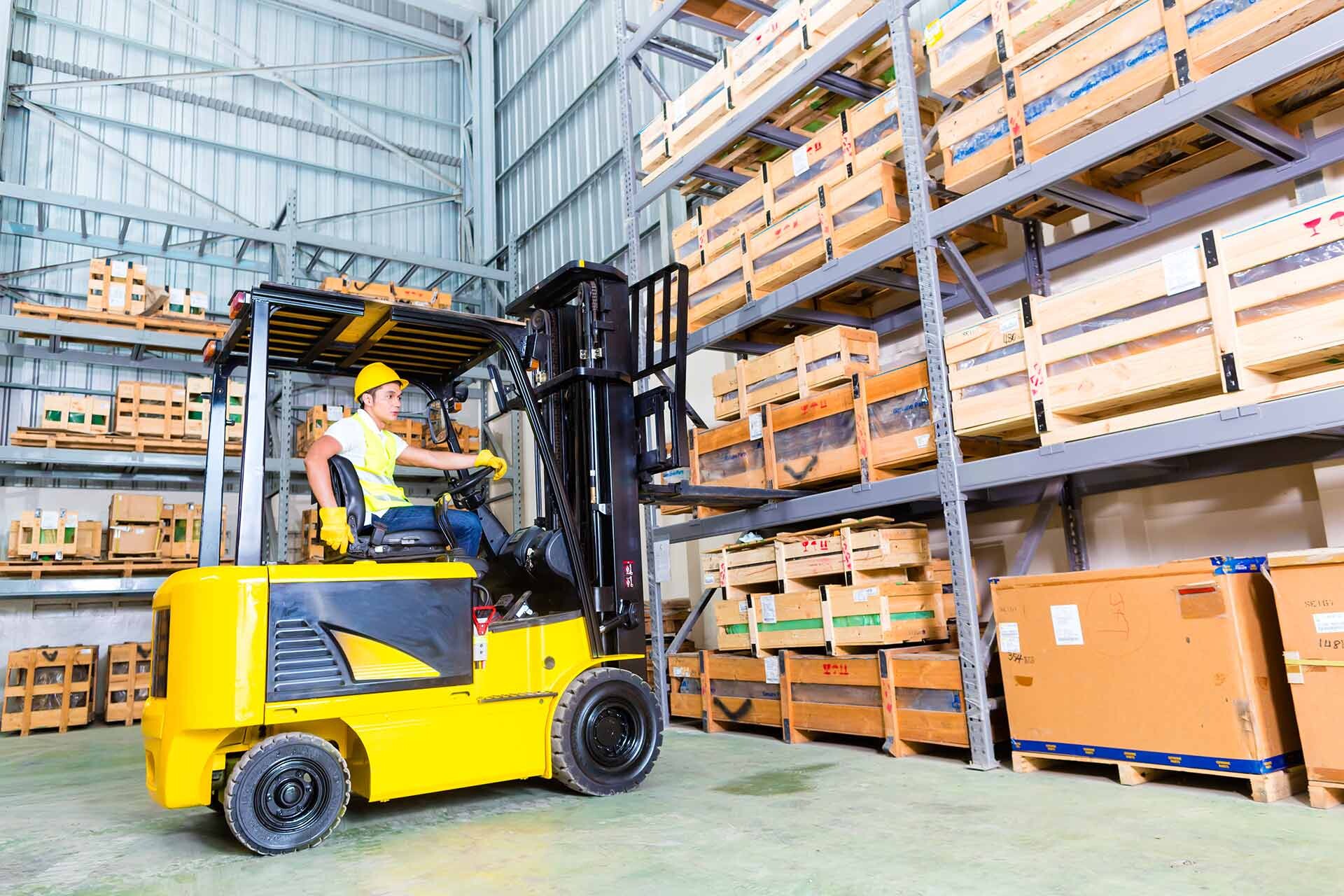
At the heart of warehouse operations, a seemingly basic yet critical decision impacts efficiency and cost daily: how to match the various handling tasks with a Warehouse Forklift whose capacity is precisely appropriate. A wrong choice is like asking a weightlifter to compete in gymnastics—a mismatch in strength or agility leads directly to wasted performance and safety hazards. True wisdom lies in identifying your warehouse's unique "movement patterns" and precisely selecting, from the broad spectrum of 1 to 3.5 tons, the Warehouse Forklift whose capacity perfectly matches the scenario. This is not about pursuing extreme specifications, but about finding the optimal solution for application.
Deriving Requirements from Scenario: Mapping Your Operational Profile
The selection journey begins with a calm and objective analysis of your own operations, not by browsing product catalogs. You need to become the "analyst" of your own warehouse, defining its core physical and procedural characteristics.
First, analyze the "DNA of your material flow". The key lies not in the average weight, but in the "peaks" and "norm" of the weight distribution. For example, a packaging materials warehouse may routinely handle pallets around 1 ton, but the several batches of core raw material pallets received monthly consistently weigh 1.4 tons. Choosing a 1-ton Warehouse Forklift based solely on the "norm" would force the equipment to operate continuously under overload during critical tasks, accelerating wear and embedding risk. The correct logic is: take the most frequently occurring heavy load as the baseline and add approximately 15% as a safety and durability buffer. This means that for common heavy loads of 1.4 tons, a 1.5-ton or 2-ton Warehouse Forklift provides a composed, safe, and long-lasting solution.
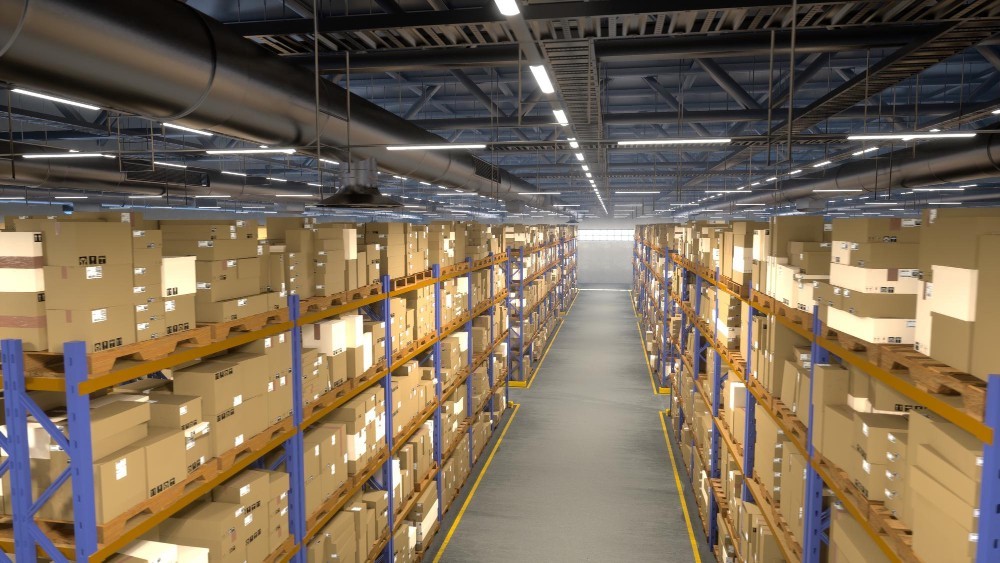
Second, survey the "geometry of your space". The physical layout of the warehouse is the rigid constraint determining the equipment's form. Take precise measurements: What is the width of the narrowest working aisle? What is the height of the lowest overhead obstruction (e.g., sprinkler pipes, door headers)? In a fast-moving consumer goods warehouse pursuing storage density, aisles might be compressed to 2.3 meters. Here, a 1.5-ton Warehouse Forklift with an extremely small turning radius and a "full free-lift" mast becomes a nimble and agile solution, transforming every inch of space into a storage location. Conversely, in a warehouse with 9-meter ceilings storing large industrial products, you need not just high capacity but also stability when lifting to height. The robust chassis and reinforced systems of a 3-ton Warehouse Forklift provide precisely this sense of "effortless" steadiness.
Precise Alignment of Capacity and Application Scenario
Lightweight Agility Experts (1 ton - 1.5 ton): The Efficiency Engines in High-Density Mazes
Typical Scenarios: E-commerce order fulfillment centers, electronic component storage, material delivery for light assembly lines.
Scenario Analysis: The core challenges here are "scarce space" and "fragmented orders." Individual item weights are limited, but pick locations are highly dispersed, requiring equipment to start, stop, and turn frequently. A 1.5-ton Warehouse Forklift (especially a three-wheel electric model), by leveraging its exceptional maneuverability, can optimize the operator's travel path to the shortest possible, directly increasing order processing rates. Its lower energy consumption and heat output also perfectly suit the operational environment that often requires prolonged indoor running.
All-Round Workhorse (2 ton - 2.5 ton): The Reliable Backbone in Standardized Processes
Typical Scenarios: Food and beverage storage, work-in-progress handling in general manufacturing, wholesale distribution centers.
Scenario Analysis: This is the most classic industrialized handling scenario, dealing with fully loaded standard pallets. A 2-ton or 2.5-ton Warehouse Forklift is the absolute mainstay in this field. It is designed to efficiently and reliably complete the full cycle from receiving, put-away, replenishment to loading. For instance, in a beverage warehouse, a full pallet of bottled water often weighs close to 2 tons. A 2.5-ton Warehouse Forklift provides just the right performance reserve, ensuring sustained, stable productivity output over an eight-hour shift, representing the widest applicability and balance of return on investment.
Heavy-Load Conquerors (3 ton - 3.5 ton): The Power Foundation for High-Intensity Operations
Typical Scenarios: Metalworking and foundry workshops, building materials storage (e.g., tiles, stone), large paper roll or chemical raw material handling.
Scenario Analysis: When the density and weight of the material itself become the primary concern, equipment beyond the ordinary is required. The 3-ton and 3.5-ton Warehouse Forklifts are built for this. They provide not only the rated lifting capacity; their entire powertrain, frame structure, steering mechanism, and hydraulic components are of reinforced design. In a steel plant, moving steel coils weighing a consistent 2.8 tons is a daily task. Using a 3.5-ton Warehouse Forklift, its value lies not just in "being able to move it," but in its ability to withstand the structural stresses of long-term heavy loading, ensuring the equipment's availability and stability over its multi-year lifecycle.
Core Configurations: Key Choices That Vary with Scenario
With the capacity stage set, the next step is to tailor this Warehouse Forklift fully to your working environment through choices in key configurations.
Energy Strategy: Matching Your Operational Rhythm
High-Intensity, Multi-Shift Scenarios: Lithium-ion battery solutions are increasingly becoming the preferred choice. Their support for rapid "opportunity charging" (e.g., topping up during breaks), near-zero maintenance, and low total energy cost over their lifespan make them effective in reducing the total cost of ownership and increasing operational flexibility for warehouses seeking to maximize equipment utilization.
Single-Shift, Cost-First Scenarios: Traditional lead-acid batteries still hold value. However, it is essential to accurately calculate the infrastructure for a dedicated charging area, periodic maintenance costs, and future battery replacement budgets, incorporating them into a long-term cost model.
Model Selection: The Balance Between Stability and Agility
Three-Wheel Electric Warehouse Forklift: This is the ultimate answer to the challenge of "confined space." Its unique steering mechanism achieves an exceptionally small turning radius, directly reducing aisle width requirements and thereby increasing storage capacity. It is suitable for dense storage warehouses with aisles less than 2.5 meters wide.
Four-Wheel Electric Warehouse Forklift: While offering excellent maneuverability, it provides better longitudinal stability and ground adaptability. For environments with average floor flatness, or those requiring frequent indoor-outdoor transition, and for Warehouse Forklifts of 2.5 tons and above, the four-wheel design offers more stable and confident handling and safety.
summarize
Selecting an ideal Warehouse Forklift is essentially about finding a seamless physical interface for your unique material flow. From the agility of 1 ton to the strength of 3.5 tons, the ultimate goal is for it to become "invisible" within your scenario—executing every instruction reliably, efficiently, and without issue. When this piece of equipment moves in perfect harmony with the rhythm of your warehouse operations, you will know that this scenario-based precision match is a success.


Chat Online